


Infinite Space — Prague Planetarium
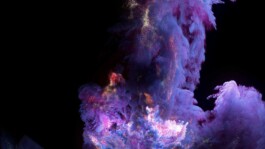
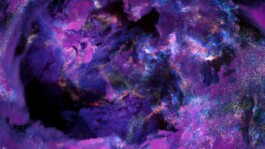
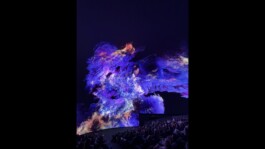
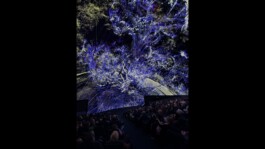
Infinite Space is a fulldome audiovisual production premiered on March 31, 2026 at Festival Spectaculare beneath the dome of the new Planetarium Prague — Europe's most technologically advanced fully digital LED dome, more than 22 meters in diameter and covered with over 45 million display diodes, enabling detail and contrast unimaginable with conventional projection technologies. It is the first presentation of its kind in the Czech Republic.
Dalibor Cée and Alex J. Jindrák work with LiDAR scans, MRI brain imaging, and cosmological simulations — empirical data that is not illustration, but the building material of the image. The music of Rafael Anton Irisarri — moving between post-minimalism, drone, ambient, and electroacoustic — is not defined by rhythm, but by duration. It holds the viewer in an extended moment where time slows and ceases to exist.
The projection creates a space for deep perception and contemplation, where experience is not guided by narrative, but by the viewer's own sensory awareness — opening questions about the nature of space, infinity, and human scale.
Spectaculare × Modified.Studio · Planetárium Praha · fulldome AV · Ø22 m / 45M dx · score by R. A. Irisarri · visuals by D. Cée & Alex J. Jindrák · dramaturgy by Josef Sedloň · 2026










Napoleon — Slavkov Castle Austerlitz – Permanent Exhibition
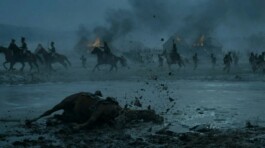
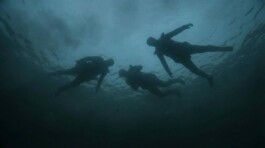
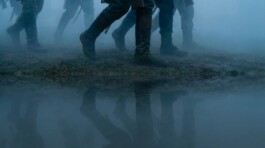
For the new permanent exhibition at Slavkov – Austerlitz Chateau, we created the main audiovisual content that translates the events of the 1805 Battle of Austerlitz into a contemporary visual language. Opened in May 2026 in the chateau's restored stables, the exhibition combines authentic historical artefacts with film, CGI and fully AI-generated imagery — and the moving image makes up a substantial part of what visitors see and experience. We developed the project over roughly nine months, working across several distinct content pieces from script and visual development through CGI to final AI production and post-production. The resulting AI content runs to a total of 18 minutes. Historical accuracy framed the entire project: every detail was grounded in historical data or period visual material, with the process continuously reviewed by historians.
The sound design was produced by Napa Records under the direction of Martin Tauber. The historical characters were voiced by leading Czech actors.
Capacity Expo × Modified.Studio · Slavkov – Austerlitz Chateau · lead audiovisual content · direction: Alex Jindrák & Pavel Bruček · AI development & CGI: Modified.Studio · sound: Napa Records / Martin Tauber · client: Town of Slavkov u Brna · 2026

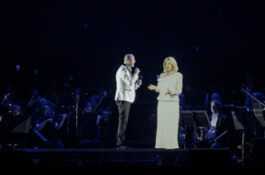
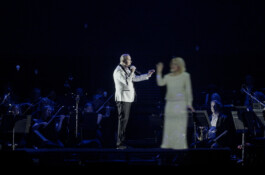
Hologram — Hana Zagorová, gala concert Štefan Margita
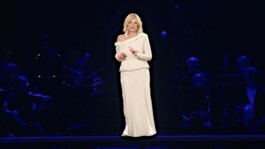
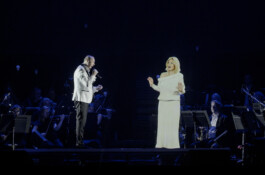
For the gala concert Štefan Margita a andělé strážní – "70", held on 15 May 2026 at a sold-out O2 arena in Prague, we at Modified.Studio created a digital reconstruction of the late Hana Zagorová. Alongside Štefan Margita she performed the solo Já nemám strach and the duet Anděl strážný — one of the strongest moments of the entire evening. I served as art director and creative supervisor on the project: from selection of the actress as physical reference, through directing the capture session, to final calibration of the digital likeness on stage.
This was an act of reconstruction, not an effect — to bring a specific personality back to the stage and to do it authentically, not merely with a resemblance. After two months of intensive work we transferred the actress's captured performance into our in-house development pipeline and mapped Hana Zagorová's face onto her; the gestures, expressions, and body language remained authentic — only the face was replaced. The holographic projection and its integration into the stage design were handled by Screenrental, led by Jan Neubauer — the figure was not projected as a flat image but appeared to step toward the audience and, by the end, dissolved away. The uniqueness of the whole performance lay precisely in this combination.
Štefan Margita × Modified.Studio · art direction & creative supervision by Alex J. Jindrák · physical reference: Jana Švandová · holographic projection: Screenrental / Jan Neubauer · directed by Filip Renč · PKF – Prague Philharmonia conducted by Jan Kučera · produced by Monika Trávníčková · O2 arena, Prague · 15 May 2026 · 2026


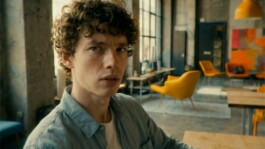
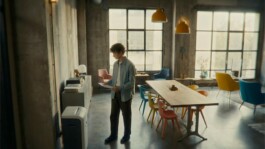

Čočkýna — Let it crunch!
The first fully AI-generated spot for a Czech snack brand. The client's real product plays the lead role in every shot, moving through different environments and characters. The spot is full AI development — every frame, every character, every detail. No live footage, no composites. Just a carefully orchestrated generative process under creative and directorial supervision.
I served as creative and AI supervisor on the project — from developing the visual language and character design, through running the generative pipeline, all the way to final post. The hardest and most rewarding part was consistency: holding the same characters, the same product materiality, and the same physics of the world across dozens of shots.
Stink Films × Modified.Studio · directed by Pavel Brůček & Alex Jindrák · 30" · 2026
Maybelline New York — Video Mapping
Signal Festival
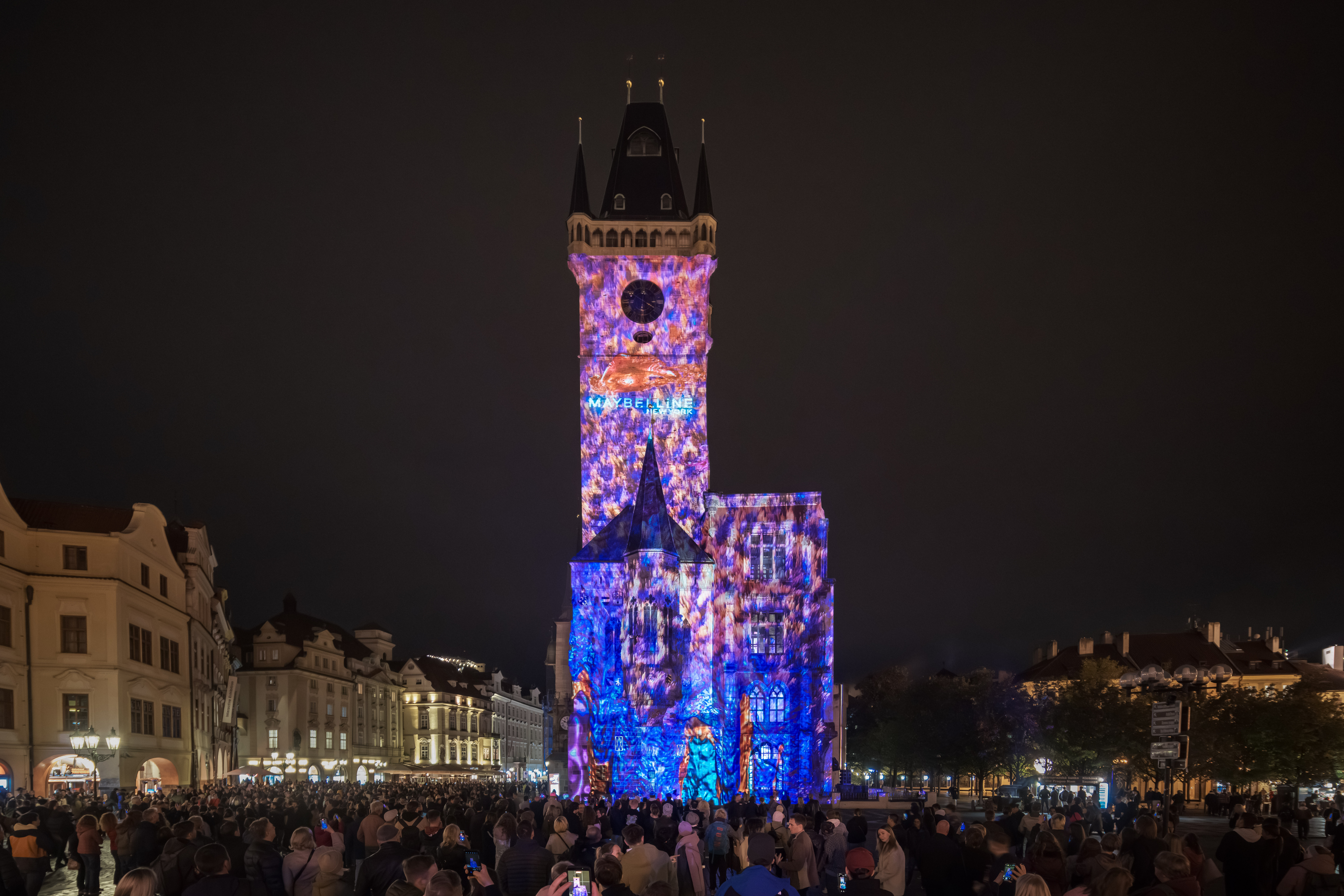
A video mapping created for Maybelline New York as part of the ongoing collaboration with Signal Festival 2025. This time the projection worked across two faces of the Old Town Hall Tower, giving viewers a new perspective on the visual. Flowing colour, a striking palette, glitter, hair, and lips — interwoven with original music — gave the mapping its energy and dynamics. Produced as a brand collaboration.
Creative direction: Alex J. Jindrák
Client: Maybelline New York (L'Oréal)

Sephora — Video Mapping
Signal Festival
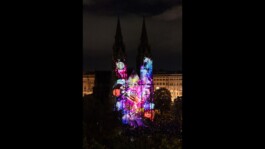
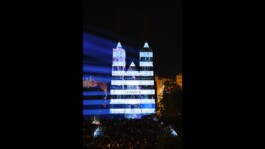
A partner video mapping created for Sephora at Signal Festival 2025, projected onto the façade of the Church of St. Ludmila on náměstí Míru. Built around the brand's clearly defined requirements, the project focused on the visual representation of individual products combined with abstract objects symbolising each person's personal identity. Placed in a 3D space, the objects gained a lightness and dimensionality that expressed their form while stimulating the viewer's imagination, narrative, and emotion. Produced as a brand collaboration within the festival.
Creative direction: Alex J. Jindrák
Client: Sephora (official partner, Signal Festival 2025)
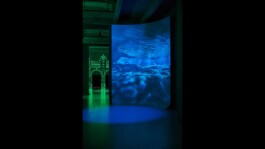
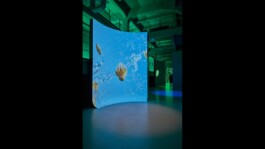
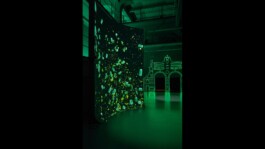
Pilsner Urquell Brewery — Permanent exhibition
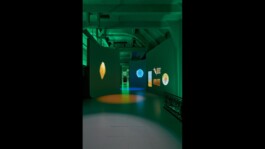
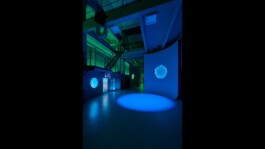
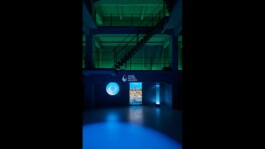
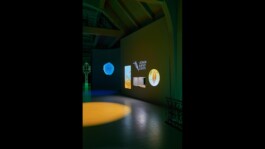
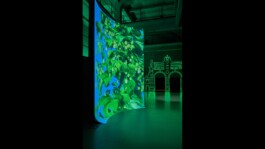
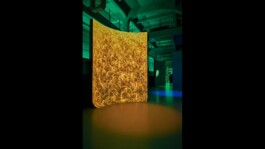
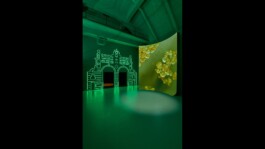
A new permanent exhibition on the Pilsner Urquell brewery tour, dedicated to the four ingredients of the Pilsner lager — malting barley, Saaz hops, soft Pilsen water, and the brewery's own yeast strain. Modified.Studio is behind the overall concept, dramaturgy, and spatial design of the exhibition, as well as its visual style and multimedia content.
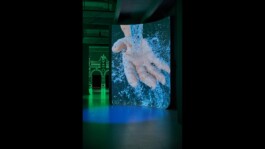
At its core is a large-format audiovisual experience built on hyperrealistic CGI animations, projected onto arched, beer-tank-shaped surfaces measuring 5 × 4.5 metres. The ingredients come alive at larger-than-life scale — a grain of barley transforms into malt right in front of the visitor, and yeast comes to life at a magnification you'd normally only see under a microscope. The exhibition closes with a tribute to the "fifth ingredient," the people of the brewery: five employees present themselves in digital form.
The architectural approach deliberately exposes the original monumental industrial character of the space, setting modern technology in sharp contrast with history. A human element is intentionally written into the visual style — palms, touches, gestures — a subliminal signal that beer is made by hand. The whole experience is multisensory: the ingredients can be seen, heard, touched, smelled, and even tasted.
The exhibition extends the Pilsner Urquell brewery tour, awarded Europe's Leading Brewery Tour (World Travel Awards 2024); the brewery welcomes over 600,000 visitors a year.
Credits
Concept, dramaturgy, visual style, CGI content, project and installation: Modified.Studio / Alex J. Jindrák
Exhibition build: LN Desing Photos: Honza Zima Client: Pilsner Urquell
Hologram — Dražen Petrovič
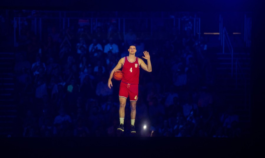
A deepfake reconstruction of Croatian basketball legend Dražen Petrović was created for the Dražen Petrović Memorial Game, the state-organized event marking the 60th anniversary of his birth, held at Arena Zagreb on 5 September 2024. Using archival footage and audio, a realistic digital reconstruction of Petrović's face, movement, voice and intonation was developed.
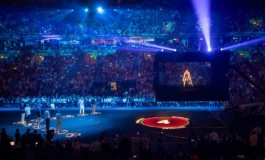
The resulting holographic projection appeared on a 10 × 5 metre screen suspended in the centre of the arena, between spectators and players. The dramaturgical concept placed the digital Petrović — in his iconic red No. 4 national jersey — back in formation alongside his surviving teammates from the 1992 Barcelona Olympic final against the original USA Dream Team, who walked onto the court in real time. Petrović then addressed the audience directly, referencing the 1992 final and his teammates standing beside him.
The moment played to a sold-out Arena Zagreb of more than 15,000 spectators, including Luka Dončić, Bojan Bogdanović, Ivica Zubac, Dario Šarić, Toni Kukoč, Dino Rađa, Vlade Divac and Nikos Galis, and was covered internationally by FIBA, Basketball Network, Basketnews and Croatian national media. It was recognized within the professional community as one of the most advanced deepfake hologram experiences globally.
Maybelline — Video Mapping Signal Festival
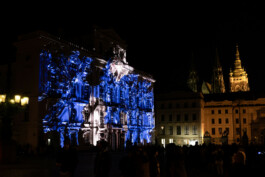
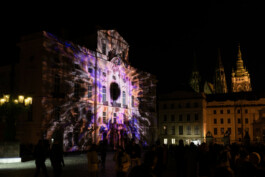
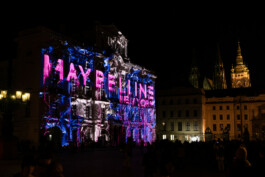
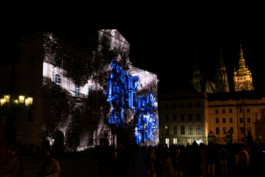
A site-specific video mapping created for Maybelline (L'Oréal), projected onto the façade of the Archbishop's Palace during the 12th edition of Signal Festival. The piece took macro details of the human eye as its starting point, rendering them in abstract form through fluid structures, dynamic colour, and varied material effects — connecting the world of beauty with digital art and evoking the essence of the brand through an audiovisual experience. Original music was composed specifically for the mapping. Produced as a brand collaboration with Signal Creative.
Creative direction: Alex J. Jindrák Music: Alex J. Jindrák in collaboration with Napa Records Client: L'Oréal — Maybelline
Signal Festival — Siemens EQube
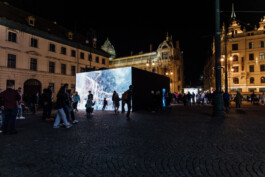
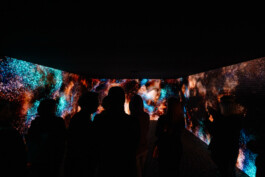
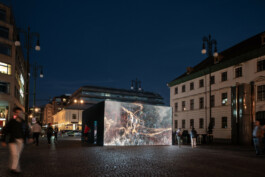
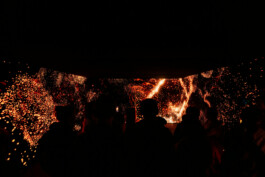
A site-specific audiovisual installation at Náměstí Republiky, created in collaboration with Innovate studio for Siemens Home Appliances. Three large-format LED walls, 15 × 2.5 metres in total, surrounded visitors and immersed them in the inner world of the Siemens EQ900 — a journey through the coffee-making process inspired by the machine's baristaMode technology. Abstract particles representing coffee beans flowed through technological structures of the machine itself, accompanied by an original sound design and the authentic aroma of freshly brewed coffee. A multisensory environment built around a single object: the Siemens coffee machine at its centre.
Site-specific · LED Installation · Multisensory · Brand Collaboration
Dark Light Metallic exhibition
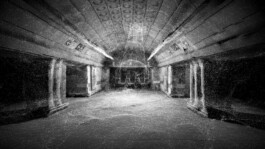
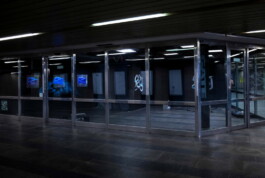
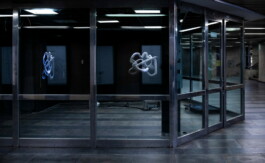
Dark Light Metallic was a multimedia exhibition combining Lucie Jindrák Skřivánková's paintings, Ondřej Rakušan's CGI, and a scan- and sound-driven spatial layer authored by Alex Jindrák. It ran from 18 May to 18 June 2023 at KG Gate, Karpuchina Gallery's satellite space in the vestibule of Prague's Můstek metro station — the first Prague gallery dedicated exclusively to digital art in public space, fully glazed and visible 24/7 to the commuters crossing the underground corridor. At the core of the project was a detailed 3D scan of the Můstek interior produced by Alex Jindrák — escalators, vestibules, tunnels, side passages onto the platforms. From that volumetric record the team built a living visual substrate that was image-mapped onto Skřivánková's canvases and recomposed by Rakušan's CGI work, turning the station into its own post-apocalyptic landscape. The exhibition centred on three works: Triptych 2023, three paintings carrying a live, time-evolving colour projection of the scanned interior; the Diptych Dark-Light 001 / 002, leaning on the heavy plasticity of the painted surface; and a floor-mounted screen that pulled the viewer's gaze downward into a slow black-and-white metamorphosis — biological at first, then resolving into the recognisable geometry of the station itself.
The sound layer was built from field recordings made by Alex Jindrák deep in the metro — the drone of the platforms, the rhythm of doors and trains, fragments of voices and footsteps of the people moving through the station — compiled into a dense audio track that ran across the space. The conceptual move was deliberate: lifting the soundscape out of the tunnels a few metres below and returning it, out of context, to the vestibule above.
Because of the gallery's full glazing, the projection bled outward into the corridor and fell directly onto passing commuters; for a few seconds, every person crossing the underpass became part of the work. Dark Light Metallic was the third chapter in an ongoing collaboration that began with the NFT collections NFT 202204 and NFT 202206 (2022), extending the same reality–digital–virtual–reality loop into spatial installation, sited inside the very architecture the work was built from. The exhibition was curated by Alexandra Karpuchina and received extensive coverage in Novinky.cz, Právo, and the Czech cultural press.

Alma Prague
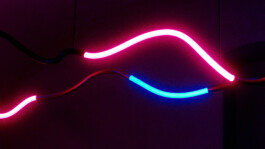
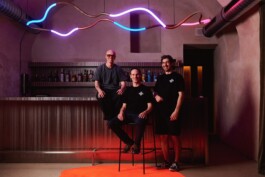
In the cellar of Prague's Alma, on the site of a former first-republic cinema, a small cocktail club designed from the outset as a single object rather than a decorated room. The brief was to make more than a bar; the answer was an authorial environment built across three media — light, moving image, and textile.
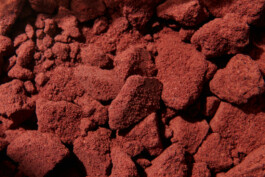
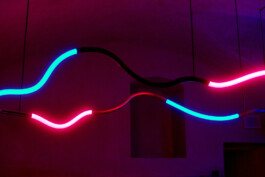
The object was created specifically for this space, using the same materials as the restaurant's interior. Suspended above the bar, it consists of six light sources and five elements, each with a different surface finish; seen from below, it appears to levitate. A custom carpet was woven for the same room, its shape derived from the same curves as the light object. Its reflective colour dominates the space and carries the contrast of the entire visual concept. Across the facing wall runs a subtle mapping built from 3D scans of natural stone gathered around the world — from Brazil to Brittany — that decompose and expand into new structures. Together, light, mapping, and carpet pay homage to natural materials and hold one continuous atmosphere.
The project was developed from January 2024 in close collaboration with Alma's bar team.
Role: concept, interior, and authorship of the light object, the mapping, and the carpet.
Photos: Vojtěch Tesárek
Almanac — Prague GMA
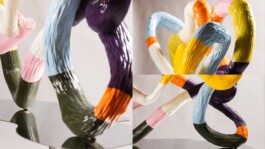
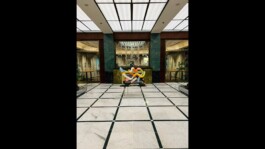
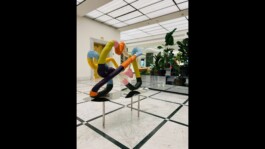
This project represents the transformation of a digital object or animation into a real sculpture using modern technologies. This interior object was created in collaboration with L. J. Skřivánková. This object captures the brushstrokes of the painting, which were digitally scanned and then used to create a 3D model.
This was used in a limited series of NFTs. To complete this series, the 3D model was transferred from the virtual world to reality. The object was printed on 3D printers and then coloured. Only one piece was created in this size. The Solitaire dominates the space at Almanac X Alcron Prague.

Signal Festival — DeLonghi
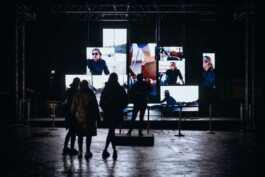
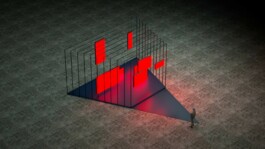
Defragmenting the viewer's illusion - this installation works with the principle of optical illusion and image fragmentation. At first, the viewer sees only seemingly unrelated parts that do not make sense. However, once they reach a certain point or angle of view, the individual fragments come together to form a clear and coherent image. It is a play with depth and perspective - the projection surfaces are arranged so that the whole comes together only from one specific place. This forces the viewer to move and actively search for the right angle, which enhances their experience of the work.